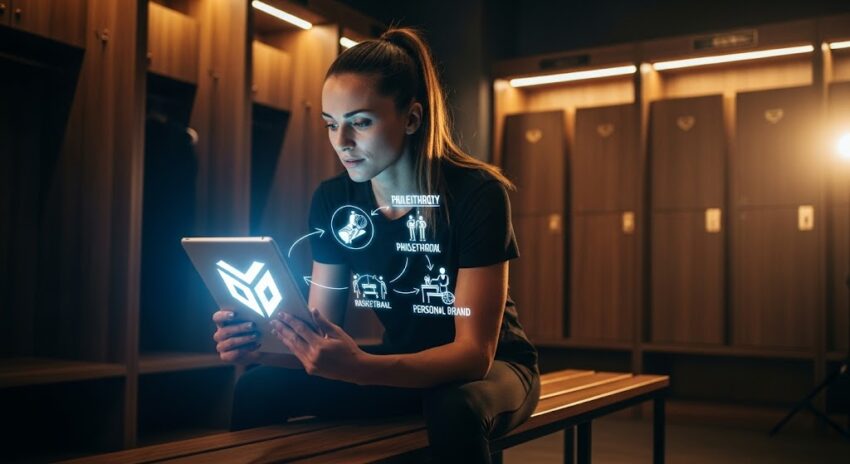
Sports today aren’t just about what happens during the match. People still care about goals, baskets, and records, but fans are paying more and more attention to what athletes do outside of the arena. The whole idea of a “personal brand” has become a big deal. It’s not only about performance anymore; it’s about identity, values, and personality. That’s where sports marketing and representation agencies come in—they help organize, protect, and boost that side of things.
Building a Personal Brand: The Foundation
For an athlete, building a brand starts with a simple question: who am I and what do I stand for? All of that can turn into a story that fans follow. The tricky part is that careers don’t last forever, so if you don’t work on the brand while you’re still playing, you miss the chance. Posting on social media, giving interviews, and showing a bit of your life behind the scenes all adds up. Fans want authenticity more than perfection.
For example, think about a basketball player who always talks about education, who came from a tough neighborhood and now supports schools. If he keeps that consistent and aligns with sponsors that share the same vision, he suddenly becomes more than just “the guy who scores points.” He becomes a symbol, a role model. That makes his brand stronger and more valuable for endorsements.
The Role of Agencies: A Shield and a Microphone
But athletes can’t really do all that by themselves. Training, traveling, games, and injuries are already a lot to handle. That’s why agencies exist. A good agency is like both a shield and a microphone. They protect you from bad contracts or shady deals, and they also amplify your voice, getting you the right endorsements and connecting you with brands that fit your values.
Digital Strategy
One of the biggest fronts is digital. Social media can be dangerous if you don’t manage it well. Some athletes are naturals, they know how to entertain and engage. Others struggle, either posting nothing or oversharing. Agencies provide strategy, content teams, and even media training. They ensure the athlete’s Instagram or TikTok is part of a bigger story.
Philanthropy
Philanthropy is another key angle. Fans love when athletes give back, and it often feels more genuine. It can be through a foundation, charity events, or just supporting causes they care about. Agencies can structure that so it’s not only a one-time photo op but an actual long-term project. This also strengthens identity: you’re not just an athlete, you’re someone who cares about something beyond yourself.
Long-Term Planning
Then there’s the long-term part. Most athletes retire young. If they don’t build a strong brand before, they might be lost after. Agencies help plan ahead for things like TV commentary, starting a business, coaching, or becoming a brand ambassador. Even smaller-scale athletes can transition smoother if their brand is solid.
Crisis Management
And then there’s the not-so-fun part: crisis management. Athletes are human and they mess up. It could be a bad comment, a personal scandal, or even a serious legal issue. These moments can destroy a brand quickly. Agencies prepare for this by having plans, giving media training, and guiding the athlete on how to respond. Fans forgive mistakes, but only if the reaction feels real, not like a script.
A Personal Brand as a Narrative
A personal brand is basically a narrative: “this is who I am, this is what I stand for, this is why you should support me.” When athletes and agencies build that story together and keep it consistent, the result is powerful. It goes way beyond wins and losses, because even the best eventually stop winning.
But the brand, if it’s built right, can keep living.