Most people arrive in the Sacred Valley without really knowing what to expect. They’ve heard the name, maybe seen a photo or two, and they know it’s somewhere between Cusco and Machu Picchu. That’s about it. But once they spend a little time there, something shifts. The Sacred Valley doesn’t try to impress you loudly. It works slowly, almost quietly, and that’s why the experiences of the Sacred Valley tend to stay with people long after the trip is over.
The Atmosphere of Calm
One of the first things people notice is how the valley itself feels. The land opens up, the air seems easier to breathe, and everything moves at a calmer pace. Many travelers say they didn’t realize how tense they were until they arrived and felt their shoulders drop. Mornings are especially memorable. You wake up to light moving across the mountains, fields already being worked, and a sense that life has been continuing here long before visitors ever arrived.
Pisac and Ollantaytambo: History and Continuity
Pisac is often the first real stop, and for good reason. The ruins sit high above the town, and getting there feels like climbing into history. The stone paths, the terraces, the views stretching across the valley all come together in a way that feels balanced, not overwhelming. Afterward, people wander through the market below. It’s not just about souvenirs. It’s about watching locals sell fruit, chat with neighbors, and go about their day. That mix of ancient and everyday life makes Pisac easy to remember.
Ollantaytambo tends to hit people differently. It doesn’t feel like a ruin you visit and leave. It feels like a place where history never fully packed up and moved on. The narrow streets, the stone walls, the sound of water running through old channels all create a sense of continuity. Climbing up to the fortress is tiring, and there’s no pretending otherwise. But standing at the top, looking down at the town and the valley, many travelers feel a quiet respect for the people who built it and the people who still live there.
Engineering Marvels: Moray and Maras
Moray often surprises visitors because it looks so strange at first. Those deep circular terraces don’t really make sense until someone explains them. Once you understand they were likely used to test crops in different climates, the place changes. People stop taking photos for a moment and just stand there, trying to imagine the patience and curiosity it took to build something like that.
It’s one of those places where the idea behind it feels as powerful as the structure itself.
Not far away, the salt mines of Maras leave a strong impression too. Hundreds of small pools reflect the sky, and the entire mountainside seems to glow when the light hits just right. What stays with people isn’t only how beautiful it is, but the fact that families still work these pools the same way they have for generations. It feels honest. Nothing is staged. You are simply walking through someone’s workplace and history at the same time.
Culture, Food, and Reflection
Time spent in smaller villages often becomes a favorite memory, even if people don’t expect it. In places like Chinchero, visitors watch women weave, dye wool with plants, and explain their work without hurry. There’s pride there, but also normalcy. This is not a performance, it’s daily life. Many travelers leave with a deeper appreciation for things they once took for granted, like the time and care behind handmade objects.
Food in the Sacred Valley also tends to leave a mark. Meals feel grounded and real. Potatoes taste richer, corn seems sweeter, and soups feel like something your body actually needed. Some people join simple cooking experiences or visit farms, while others just enjoy a quiet lunch with a view. Either way, eating here feels connected to the land in a way that’s hard to explain but easy to feel.
For those who like to move, the valley offers gentle ways to do it:
- Walking old paths.
- Biking between villages.
- Riding a horse through open fields.
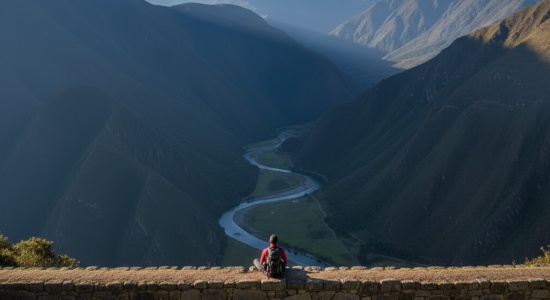
These moments often feel more personal than visiting famous sites, because there’s space to think and breathe. Many travelers also find themselves reflecting more than usual in the Sacred Valley. Some join small ceremonies or meditation sessions, while others simply sit near a river or stare at the mountains in silence. You don’t have to believe in anything special to feel that the place invites stillness.