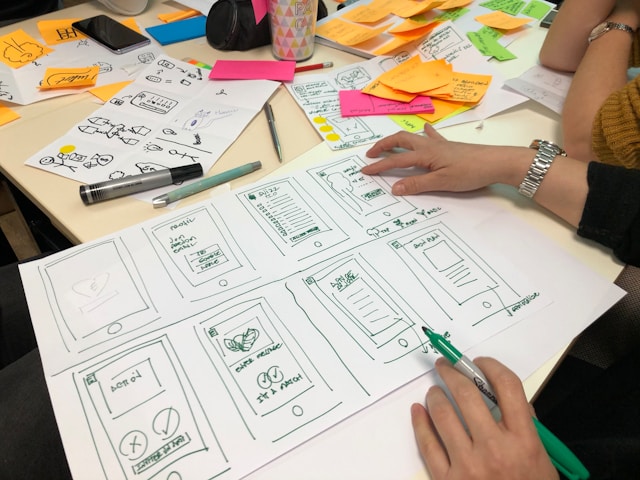
Choosing the right design thinking approach for your app can mean the difference between building a product that thrives and one that fails to engage its audience. While design thinking typically follows five stages—empathize, define, ideate, prototype, and test—there are different ways to apply these principles depending on the project, the team, and the desired outcome. Understanding how to align your approach with your specific context will help ensure your app addresses real user needs and performs well in the market.
Understanding the Flexibility of Design Thinking
Before diving into any particular model, it’s important to understand that design thinking is not a one-size-fits-all process. There are different frameworks and adaptations of design thinking, and each has its own strengths. The traditional five-step model is a good starting point, but variations such as the Double Diamond model, Lean UX, Google Ventures’ Design Sprint, or the IBM Enterprise Design Thinking framework all offer unique benefits. What matters most is understanding the nature of your app, your users, your timeline, and your resources.
Clarify Your Goal First
The first step in selecting the right design thinking approach is to clarify your goal. Are you trying to create a brand-new app based on a previously unaddressed need? Or are you improving an existing product that has already gained traction?
If your goal is innovation from scratch, then a comprehensive approach like the Double Diamond can help you explore problems thoroughly before jumping to solutions. This model divides the process into two main phases: discovering the problem and developing the solution. Each phase has a divergent and convergent stage, allowing your team to both expand thinking and narrow down choices in a disciplined way.
Working Under Time Pressure
If your team is working under time pressure or you’re operating within a lean startup environment, you might consider using a Design Sprint. This condensed, five-day version of design thinking focuses on solving specific problems quickly through rapid prototyping and testing. It’s particularly useful for validating risky ideas or testing a new feature in a short period. A Design Sprint requires full dedication from team members over a short burst of time, so it’s best suited for focused, high-priority questions rather than long-term projects.
When Flexibility is Key
Lean UX is another approach worth considering if your app is part of a continuously evolving digital product. In contrast to traditional design thinking, Lean UX emphasizes continuous experimentation, real-time feedback, and close collaboration between design, development, and product teams. This model works especially well in agile environments where user feedback is integrated at every sprint. If your app development process is iterative and your team values flexibility, Lean UX may provide the agility and responsiveness you need.
Know Your Audience
Another factor in choosing the right approach is your understanding of your target audience. If you’re working with a user group you don’t know well, investing more time in the empathize and define stages will be essential. You’ll want to conduct user interviews, surveys, and observations to get a detailed picture of their pain points, needs, and behaviors.
On the other hand, if your app is for a user group you already serve, you might streamline these early stages and move more quickly into prototyping and testing.
Team Composition Matters
Team composition also plays a role in determining which design thinking method to follow. Some approaches, like Design Sprints, require intense, cross-functional collaboration over a short period, which may not be feasible if your team is distributed or juggling multiple priorities. In such cases, a more extended approach like the traditional design thinking process or the Double Diamond model might offer a better fit, allowing more time for asynchronous work and broader involvement from stakeholders.
Consider Budget and Resources
Budget and resources are practical concerns that should not be overlooked. More comprehensive design thinking processes require time, personnel, and often financial investment in research and testing tools. If you are a small startup with limited resources, a Lean UX approach or a single focused Design Sprint can offer significant value without stretching your team thin. These approaches enable quick feedback and course correction without committing to long development cycles.
Factor In App Complexity
Another consideration is the nature of your app itself. Is it a utility app meant to solve a simple, specific problem, or a complex platform intended to offer multiple services? Simpler apps might benefit from a streamlined approach with a focus on fast prototyping and testing. In contrast, more complex projects could require a more rigorous process to explore different dimensions of the problem space before converging on a final solution.
Related posts:

Transforming Business Operations with Blockchain: A Path to Enhanced Efficiency

How AI and machine learning are changing the way mobile apps are developed and used

Why Computer Vision Isn’t Just Tech Hype and How It Could Actually Help Your Business