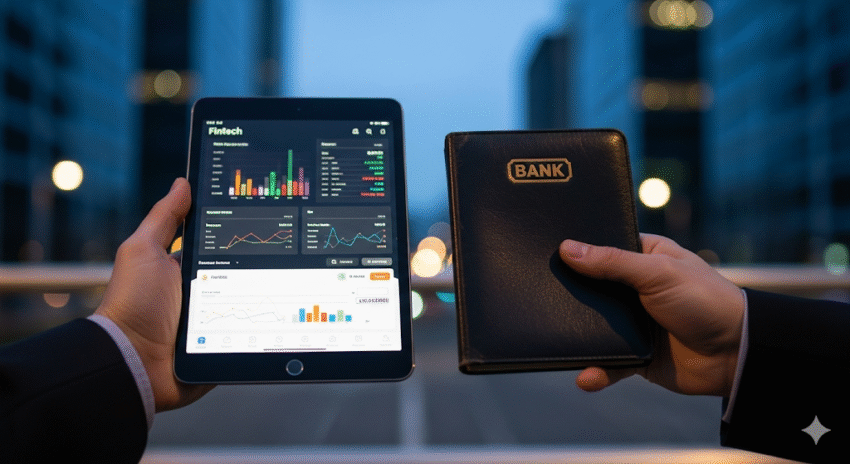
If you think back twenty or thirty years, the idea of handling money without stepping into a bank branch seemed almost impossible. People lined up to deposit checks, to transfer money, or just to ask a teller a simple question about their accounts. Banks were the gatekeepers of financial life, and customers had to fit into their systems, schedules, and rules. Fast forward to today, and things look radically different. Financial technology, or fintech as everyone calls it, has grown from being a niche startup scene into a major force reshaping how people interact with money. The story of fintech and banking is not just about apps and algorithms, it’s about the changing expectations of customers and the battle between old institutions and new players.
The story of fintech and banking is not just about apps and algorithms, it’s about the changing expectations of customers and the battle between old institutions and new players.
The Rise of Fintech and the Changing Mindset
Fintech started small. At first, it was just a few companies trying to make payments easier or to offer online lending options. But what made them stand out was their approach. Instead of long queues, paperwork, and waiting weeks for approval, they promised speed, simplicity, and user-friendly experiences. Sending money through an app with a few taps felt light years ahead of filling out transfer forms at a branch. For younger generations who grew up with smartphones, there was no reason to accept the old way. That shift in mindset has been one of the biggest drivers of fintech’s rise.
Traditional banks at first underestimated this wave. For decades, they operated with the belief that customers were “sticky.” But fintech broke that logic. A new customer could download an app, sign up in minutes, and start using services without ever walking into a bank. Suddenly loyalty was no longer guaranteed. Banks realized late that they could lose an entire generation of customers if they didn’t evolve.
The Fintech vs. Banking Battlegrounds
Payments have been the clearest battlefield. Apps like Venmo and PayPal have made transferring money almost instant. No hidden fees, no waiting three days for funds to clear. That kind of convenience exposed how outdated some banking systems were. The same happened with loans. Online platforms used algorithms to analyze creditworthiness in unconventional ways. While traditional banks stuck with rigid credit scores, fintech companies could approve people who had been invisible to banks but still reliable borrowers. This opened financial access for millions who had been left out.
A Dance of Rivalry and Partnership
But the relationship between fintech and banks is not just about competition. Over time it has started to look more like a dance of rivalry and partnership. Banks still hold the advantage of deep resources, regulatory experience, and established customer bases. Fintechs bring agility, innovation, and a focus on customer experience. Some banks chose to fight, developing their own digital products. Others went the partnership route, integrating fintech solutions into their systems or even acquiring promising startups. In many cases, customers benefit because they get the best of both worlds: the security of a bank and the speed of a fintech app.
Lingering Tensions: Regulation and Trust
Still, tensions remain. Regulation is a main friction point. Banks operate under strict supervision. Fintech startups often faced lighter regulation, allowing them to move faster. Banks saw this as unfair competition, while regulators have been slowly catching up to set clearer rules for fintech. The balance is delicate: too much regulation could stifle innovation, too little could expose customers to risks.
Another area of tension is trust. Banks, despite their bureaucracy, built their reputations on being safe havens for money. People still tend to trust them more for large deposits or mortgages. Fintechs are trusted for speed and convenience but are still building credibility in terms of safety. Data security is a big part of this. Fintech firms know this is crucial, and many are investing heavily in cybersecurity to earn long-term trust.
Open Banking and the Hybrid Future
Interestingly, some of the biggest changes are happening behind the scenes. Open banking, for example, allows customers to give third-party apps permission to access their financial data from banks. This opens up an ecosystem where fintechs can build new tools on top of bank infrastructure. Instead of seeing data as something locked away, the idea is to make it flow where customers want it to go. For traditional banks, this feels risky because it breaks their monopoly over customer information. But for customers, it means more freedom and personalized services.
Looking ahead, what is more likely is a kind of hybrid world where banks and fintech coexist, sometimes competing, sometimes collaborating. Banks will probably keep the upper hand in large, capital-heavy operations like corporate lending, but fintech will dominate in user experience and niche services.