Skip to content

Syotify

Menu
  • Home
  • Business
  • Design
  • Economy
  • Health
  • Marketing
  • Technology
  • Travel
  • Contact
Menu
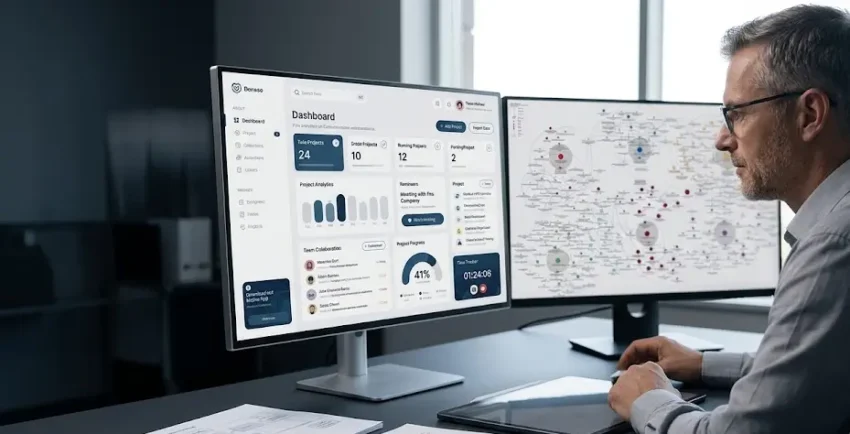
A software product engineer systematically designing a clean, modern user experience layer on top of complex legacy code structures.

Modern UX on legacy code: The product engineers’ best-kept secret

Posted on June 26, 2026June 26, 2026 by Chloe Sterling
Modern UX on legacy code represents the ultimate administrative secret shared among seasoned product engineers who must balance user satisfaction with enterprise resource conservation.There is a persistent, deeply rooted idea across the software sector that clean, current user experiences require completely updated systems underneath. When an enterprise platform begins to feel slow, visually fragmented, or difficult to adapt, the internal conversation moves swiftly toward execution resets. Product teams immediately imagine a clean slate, free from historical compromises and code debt. While this line of thinking sounds perfectly logical in project boardrooms, it ignores the immense financial and operational risks associated with tossing out functional systems. Achieving modern user experiences does not demand a multi-year system rewrite. Many of the most intuitive applications operating today rely heavily on ancient backend frameworks that remain hidden from public view. Smart engineering focuses on modifying the surface interaction layer, ensuring that core business logic continues to run uninterrupted while the user enjoys a seamless, friction-free day.

  1. Why does user perception triumph over technical purity?
  2. What hidden risks accompany a total system rewrite?
  3. How does the modernization-in-layers framework protect stability?
  4. Where do interaction bottlenecks hide within legacy systems?
  5. How to measure user satisfaction returns on surface updates?

Why does user perception triumph over technical purity?

Users never evaluate a software asset based on the elegance of its internal code repository or the age of its programming language. They react directly to whether an application behaves predictably, clarifies their workflow, and allows them to complete automated tasks without frustration. External experience is the only metric that dictates product retention.

When a customer encounters a clunky flow, they describe the problem as an outdated system, even if the backend was rewritten months ago. The codebase architecture is practically invisible to the consumer end of the business. Engineers waste valuable sprints attempting to achieve extreme technical purity when a simple reorganization of screen space would resolve the user’s operational friction instantly.

What hidden risks accompany a total system rewrite?

Full system migrations possess a notorious reputation for looking remarkably simple at the starting line but turning into operational traps later. Old codebases are not just piles of technical clutter; they function as historical ledgers that house years of edge cases, specialized customer habits, and critical business logic exceptions.

When a firm discards its foundation to start from zero, it erases decades of implicit organizational knowledge. Consider these common outcomes of full rewrites:

  • Severe project delays due to underestimated backend dependencies.
  • Loss of critical features that supported legacy corporate accounts.
  • Introduction of logical bugs into previously stable transaction processing pipelines.

Disrupting a functional pipeline is a high-stakes corporate gamble that rarely yields the immediate fiscal returns promised by software sales teams.

How does the modernization-in-layers framework protect stability?

Pragmatic product engineers handle the tension between old infrastructure and modern design demands by deploying updates in distinct visual layers. Instead of touching database rules or API routing structures, they isolate the frontend, simplifying the interface wrapper without altering the core codebase engine underneath.

This method maintains the operational data pipelines that run the enterprise while introducing responsive UI components, clearer microcopy, and better input defaults. Hiding backend complexity is significantly more efficient than attempting to erase it completely from the corporate memory. This layer system keeps development costs predictable and prevents software downtime across corporate networks during deployment weeks.

Where do interaction bottlenecks hide within legacy systems?

Many complaints directed at aging software platforms are rooted in interaction failures rather than structural engine defects. Over years of development, feature bloat slowly deforms navigation flows, scattering essential data variables across too many separate screen layouts and lengthening standard input forms unnecessarily.

These flaws build a sense of friction that users interpret as system latency. Resolving these bottlenecks requires an administrative audit of the surface layout, changing label names that make sense internally but confuse external operators. Reorganizing info hierarchy, adding explicit feedback indicators during load states, and cleaning menu nesting paths removes the drag from the daily office schedule without rewriting a single line of backend database code.

How to measure user satisfaction returns on surface updates?

Quantifying the return on investment for surface modernization projects demands a clear shift toward behavioral user metrics, measuring task completion rates, user error reductions, and customer support ticket drops. When a team clears out surface friction from onboarding sequences, the speed of user adoption advances immediately.

These gains show up on corporate balance sheets through reduced employee training times and lower churn rates on enterprise subscription lines. Reclaiming operational velocity through design layers avoids the capital drain of engineering rebuilds, ensuring that cash remains available for market expansion. This approach proves that keeping the underlying framework stable while refining the interactive surface is the most financially responsible path toward scaling software systems safely over time.

Related posts:

Principles and Best Practices for Implementing Responsible AI in Computer Vision Projects

Mobile Application development experts in Houston

Applicacorp

Understanding Controls in .NET MAUI and How They Work

Leave a Reply Cancel reply

Your email address will not be published. Required fields are marked *

Recent Posts

  • Hidden flavors of Lima that tourists completely miss
  • Implementing synthetic test data automation in QA
  • Broken object level authorization testing for cloud APIs
  • Why Internal Confidence Blind Spots Lead to Product Launch Failures
  • Reclaiming Control Over Codebase Complexity Metrics in the AI Era

Categories

  • Business
  • Design
  • Economy
  • Health
  • Laws
  • Marketing
  • Sports Science
  • Technology
  • Travel
©2026 Syotify | Design: Newspaperly WordPress Theme