Getting to Machu Picchu isn’t just about the destination, it’s really about the road that takes you there. Peru’s most famous site sits hidden in the Andes like some kind of dream that people chase from all corners of the world. But before you can stand in front of those iconic ruins, you have to decide how to get there. And that choice kind of shapes your whole experience. There are three main ways to reach Machu Picchu — the Inca Trail, the Salkantay Trek, and the route through the Sacred Valley and Aguas Calientes. Each one has its own personality, its own rhythm, and its own kind of magic. For a complete guide, read Your guide to reaching Machu Picchu.
The Classic: The Inca Trail
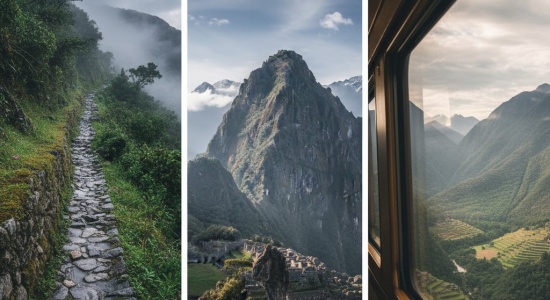
Let’s start with the classic one, the Inca Trail. Everyone’s heard of it, right? It’s the most famous route, and maybe the most demanding too, but not because it’s impossible. It’s just that you walk literally in the footsteps of the Incas for four days, surrounded by ruins, mountain passes, and cloud forests. You feel history under your feet. It’s like hiking through a museum that’s alive. The biggest advantage of this route is that you arrive at Machu Picchu through the Sun Gate, which is the ancient way the Incas did. You see the site appear slowly, through the mist, after all that effort. It’s pretty emotional for most people.
But the downside? Well, it’s very regulated. You need a permit, and those sell out months in advance, especially for the high season between May and September. It’s also pretty crowded during those months, and that can make it feel less like an adventure and more like a line of tourists on a mountain path. Also, if you’re not used to hiking at altitude, the trail can be tough. The second day is especially challenging with steep climbs.
The Wild Sibling: The Salkantay Trek
Now, the Salkantay Trek is the wild sibling of the Inca Trail. It’s less controlled, more about nature than ruins, and it’s often chosen by people who couldn’t get an Inca Trail permit or who just want more freedom. This trek usually takes five days and it’s considered one of the most beautiful hikes in South America. You cross landscapes that look like they came from different worlds — snowy mountains, turquoise lagoons, and tropical forests all in the same week.
One of the advantages here is flexibility. You don’t need a permit, and you can even do it with a local guide or an organized tour that provides all the gear. It’s usually less crowded, and the campsites are often located in incredible places with mountain views that feel unreal. The Salkantay route also offers more variety when it comes to accommodation.
But again, this route isn’t exactly easy. The first few days can be cold and challenging because you’re hiking at higher altitudes, sometimes above 4,600 meters. And if you go during the rainy season, the trail can get muddy and slippery.
The Comfortable Choice: Sacred Valley and Train
And then, there’s the route through the Sacred Valley and Aguas Calientes, which is the easiest and most popular way to visit Machu Picchu if you’re not into multi-day hikes. You start from Cusco and travel through towns like Pisac, Urubamba, and Ollantaytambo, each full of Inca ruins, traditional markets, and quiet rural life. From Ollantaytambo, you take the train that follows the Urubamba River through lush green valleys until you reach Aguas Calientes, the small town at the base of Machu Picchu. From there, it’s a short bus ride up to the citadel.
This option is perfect for people who want to enjoy the culture, eat well, stay in nice hotels, and still experience the wonder of Machu Picchu without all the effort of hiking for days. It’s also great if you’re short on time or traveling with kids. You still get to see a lot of history and nature, but in a more comfortable way. The train ride itself is beautiful, especially the panoramic ones with glass ceilings that let you see the mountains and jungle go by.
The train ride itself is beautiful, especially the panoramic ones with glass ceilings that let you see the mountains and jungle go by.
Of course, the trade-off is that you miss that sense of gradual arrival. When you take the train, you reach Machu Picchu almost too fast, and some say it feels less earned. But that depends on the traveler. For some, the comfort and time saved are worth it.