Most people dream of visiting Machu Picchu for years before they actually go, and the first thing that comes to mind is the photos of the citadel itself. What often gets forgotten until the last minute is that the whole region sits pretty high up in the Andes. Cusco, the city where most travelers start their journey, is at about 3400 meters above sea level. That’s more than eleven thousand feet.
For anyone not used to altitude, the body feels it right away. Some people get a headache, others feel like they can’t breathe properly or they walk ten steps and their legs get heavy. A few unlucky travelers get real altitude sickness that can put them in bed for days. So preparing for that change before visiting Machu Picchu is just as important as buying your ticket.
Why Altitude Matters (and It’s Not About Fitness)
Altitude affects everyone differently. You might hear stories of a super fit runner who gets knocked down with a pounding headache the first day, while someone who never exercises barely notices. Fitness helps with trekking, sure, but it doesn’t really protect you from altitude. It’s more about how your body adapts to less oxygen.
At sea level, oxygen saturation is normal. At 3000 or 4000 meters, the air is thinner and every breath brings in less oxygen, so the body needs time to produce more red blood cells to carry what little oxygen there is. That process takes a couple of days, sometimes longer.
Key Acclimatization Strategies
Go Slow and Go Low
One of the simplest and most effective things you can do is take it easy when you first arrive.
A lot of people make the mistake of landing in Cusco and wanting to go straight on a tour, hiking up steep streets, snapping photos, running around. That’s almost a guarantee for a headache by evening. The better plan is to spend the first day resting, drinking water, walking slowly, letting the body adjust. Even better, some travelers choose to go first to the Sacred Valley towns like Ollantaytambo or Pisac, which are lower in altitude than Cusco. Spending a couple of nights there before returning to Cusco can help soften the shock.
Hydrate and Try Coca Tea
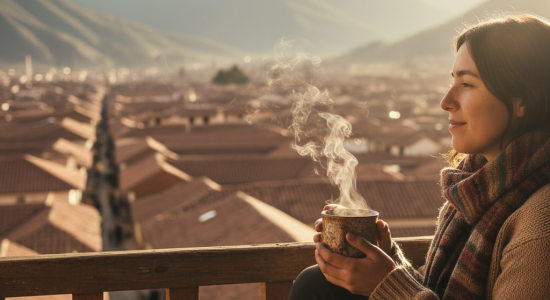
Hydration plays a big role too. The air at altitude is dry, so people get dehydrated faster without even realizing it. Drinking lots of water helps circulation and can ease symptoms. Local people also recommend coca tea, which you’ll find everywhere in Cusco. It’s made from coca leaves, mild and perfectly legal in Peru, and while scientists debate how much it actually helps, many visitors swear it makes them feel better. At the very least it’s warming and part of the cultural experience.
Eat Light and Avoid Alcohol
Another common tip is to avoid alcohol and heavy meals for the first days. Alcohol makes dehydration worse and can hit harder at altitude, while big meals can slow digestion when the body is already working extra to get oxygen. Lighter meals, soups, vegetables, and simple carbs tend to be easier. A lot of travelers notice they aren’t very hungry the first day anyway, which is the body’s way of adjusting.
Consider Medication
Some people use medication like acetazolamide, better known as Diamox, to speed up acclimatization. It makes the blood more acidic which stimulates breathing and helps oxygen levels. Doctors usually recommend starting it a day before going up to altitude. The downside is it can cause tingling in the fingers and more trips to the bathroom, but for travelers who know they are sensitive to altitude it can make a big difference. There are also local remedies sold in pharmacies in Cusco for mild symptoms.
Pace Your Activities and Your Sleep
Pacing yourself is another key. If you plan to hike around Cusco, visit ruins like Sacsayhuamán, or climb Huayna Picchu mountain once you reach Machu Picchu, try not to schedule everything back to back in the first two days. Give yourself breathing room, literally. Even short climbs can feel exhausting the first couple of days. After your body starts producing more red blood cells, the difference is noticeable. By the third or fourth day most people feel stronger and more comfortable.
Sleep can be tricky too. At altitude some people wake up at night short of breath or toss and turn more than usual. It’s not dangerous, it’s just the body’s way of trying to get more oxygen. Taking naps during the day, resting when tired, and not stressing about perfect sleep can make the adjustment easier.