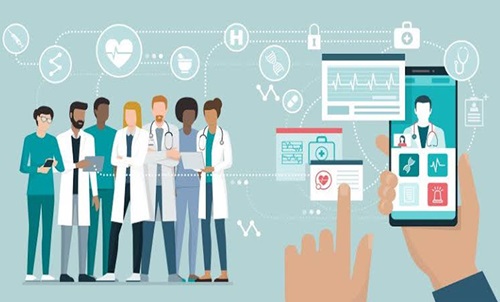
Healthcare software development firms are pivotal in transforming the medical landscape through technological innovation. These companies are at the forefront of integrating advanced software solutions into the healthcare system, aiming to enhance patient care, streamline operations, and reduce costs. This paper delves into the ways these firms are driving innovation in healthcare, examining key technologies, methodologies, and the impact of their solutions on the industry.
Technological Innovations
Healthcare software development firms are leveraging several cutting-edge technologies to revolutionize the sector. Among these, artificial intelligence (AI), machine learning (ML), blockchain, and the Internet of Things (IoT) stand out as particularly transformative.
Artificial Intelligence and Machine Learning
AI and ML are being employed to analyze vast amounts of healthcare data to uncover patterns and insights that were previously inaccessible. For instance, AI algorithms can process and interpret medical images with remarkable accuracy, often exceeding human capabilities. This application is particularly beneficial in radiology, where AI can detect anomalies in X-rays, MRIs, and CT scans swiftly and accurately, aiding in early diagnosis and treatment.
Machine learning models are also being used to predict patient outcomes, personalize treatment plans, and manage chronic diseases. By analyzing historical patient data, ML algorithms can identify which patients are at higher risk of developing certain conditions, enabling preventative care measures. This predictive capability is invaluable for managing chronic diseases like diabetes, where continuous monitoring and timely interventions are crucial.
Blockchain Technology
Blockchain facilitates the creation of smart contracts, which can automate and streamline administrative processes such as billing and insurance claims. This automation reduces the administrative burden on healthcare providers, allowing them to focus more on patient care.
Internet of Things
The IoT encompasses a network of interconnected devices that collect and exchange data in real time. In healthcare, IoT devices such as wearable sensors and remote monitoring tools are transforming patient care. These devices can continuously monitor vital signs, detect irregularities, and alert healthcare providers in real time. For patients with chronic conditions, this continuous monitoring can lead to timely interventions and better disease management.
IoT also plays a significant role in hospital management. Smart beds, for example, can monitor patient movement and adjust settings to enhance comfort and prevent bedsores. IoT-enabled devices can also track the usage of medical equipment and supplies, ensuring that hospitals maintain optimal inventory levels and reduce waste.
Methodologies in Healthcare Software Development
The development of healthcare software requires a meticulous approach, given the sensitivity of patient data and the need for regulatory compliance. Firms in this space often adopt Agile and DevOps methodologies to ensure that their solutions are both robust and adaptable.
Agile Methodology (see more)
Agile methodology emphasizes iterative development, where requirements and solutions evolve through collaboration between cross-functional teams. This approach is particularly beneficial in healthcare software development, where requirements can change rapidly due to regulatory updates or new medical research.
By breaking down projects into smaller, manageable sprints, Agile enables continuous feedback and improvement. This iterative process ensures that the software remains aligned with user needs and regulatory standards throughout the development cycle. Additionally, Agile’s focus on collaboration fosters better communication between developers, healthcare professionals, and stakeholders, leading to more user-centric solutions.
DevOps
In healthcare, where downtime can have severe consequences, the DevOps approach is invaluable. It promotes automation of testing, integration, and deployment processes, ensuring that updates and new features can be rolled out quickly and reliably.
Moreover, DevOps practices enhance the security and compliance of healthcare software. Automated testing and continuous monitoring help identify and address vulnerabilities promptly, ensuring that the software meets stringent healthcare regulations such as HIPAA in the United States or GDPR in Europe.
Impact on Healthcare
The innovations and methodologies employed by healthcare software development firms are having a profound impact on the industry. They are not only improving patient outcomes but also enhancing the efficiency and effectiveness of healthcare providers.
Improved Patient Outcomes
One of the most significant impacts of healthcare software innovation is the improvement in patient outcomes. AI-driven diagnostic tools enable early detection of diseases, leading to timely and more effective treatments. Personalized medicine, powered by ML algorithms, ensures that patients receive treatments tailored to their specific genetic makeup and health conditions, resulting in better efficacy and fewer side effects.
Remote monitoring and telemedicine solutions, facilitated by IoT, allow patients to receive care without the need for frequent hospital visits. Continuous monitoring ensures that any changes in a patient’s condition are detected early, allowing for prompt interventions and reducing the risk of complications.
Enhanced Operational Efficiency
Healthcare software development firms are also instrumental in enhancing the operational efficiency of healthcare providers. Electronic Health Records (EHR) systems, for instance, streamline the documentation and retrieval of patient information, reducing administrative burdens and freeing up more time for patient care. Integrated EHR systems ensure that patient data is easily accessible across different departments and healthcare facilities, facilitating better coordination and continuity of care.
Also, by reducing the time and effort spent on administrative tasks, healthcare providers can allocate more resources to direct patient care, improving overall service quality.